START WITH WHAT YOU NOTICED
Why Am I Tired After Sleeping 8 Hours?
Hours in bed do not tell the whole story, but they also do not reveal the cause of fatigue. Start with one night of simple observations, then look for patterns without jumping to a diagnosis.
SomniSense can add microphone-based nighttime observations. It cannot determine why you feel tired or rule out sleep, medical, medication-related, schedule, or mental-health factors.
WHAT SOMNISENSE ADDS
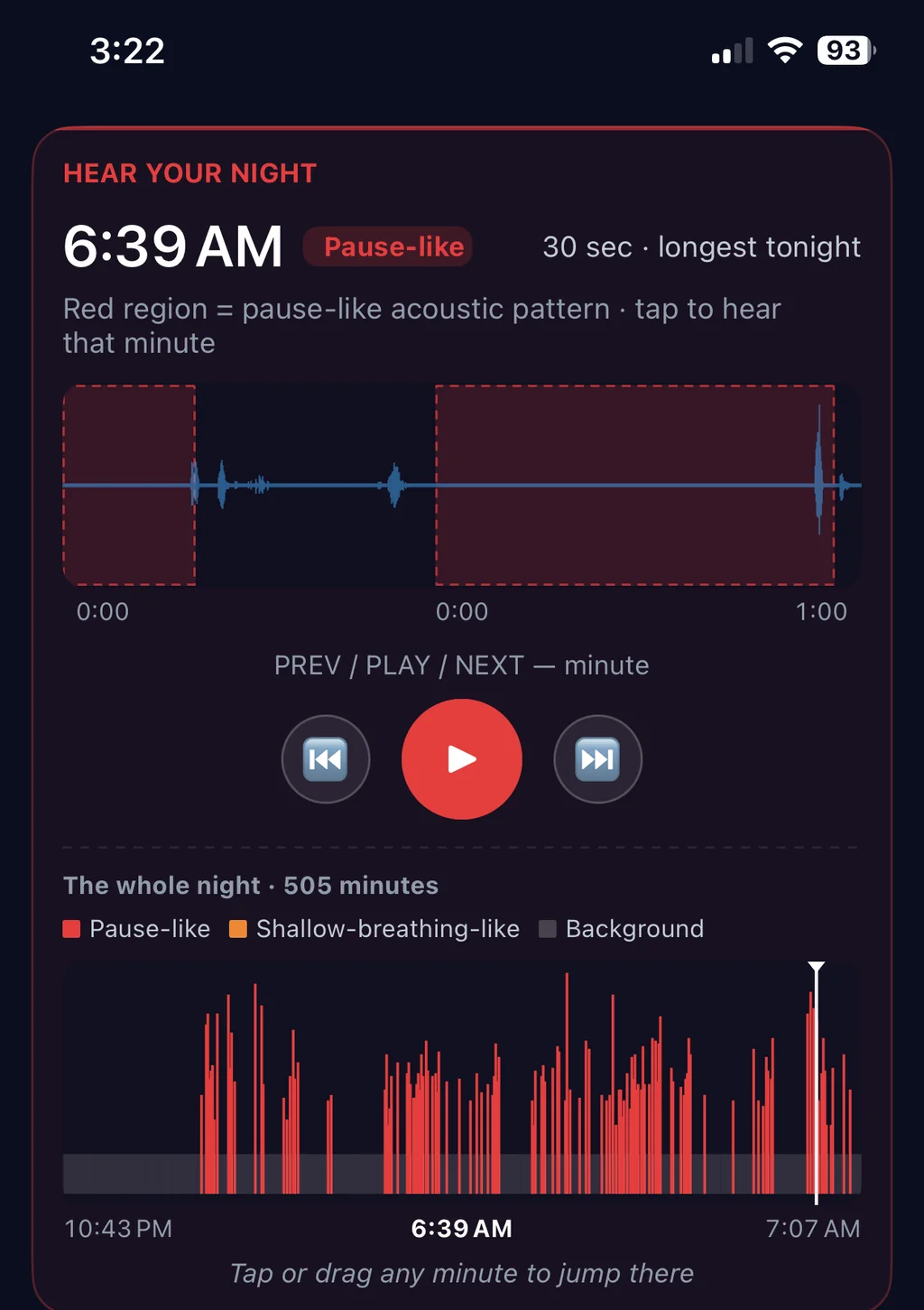
Inspect the acoustic part of the night, then follow it across nights.
SomniSense cannot explain fatigue, but it can show when candidate breathing-sound patterns appeared, return you to the marked minute and available audio, and carry repeated nights into a personal baseline. That gives you more context than hours in bed without pretending to identify the cause.
- Candidate pause-like or shallow-breathing-like type, time, and model-estimated duration
- The marked waveform region and locally available audio for review
- Whole-night position, followed across nights in recent comparisons and structured reports
Phone audio is a limited wellness signal. Candidate regions are not clinical apnea events, AHI, oxygen measurements, airway-source findings, or a diagnosis.
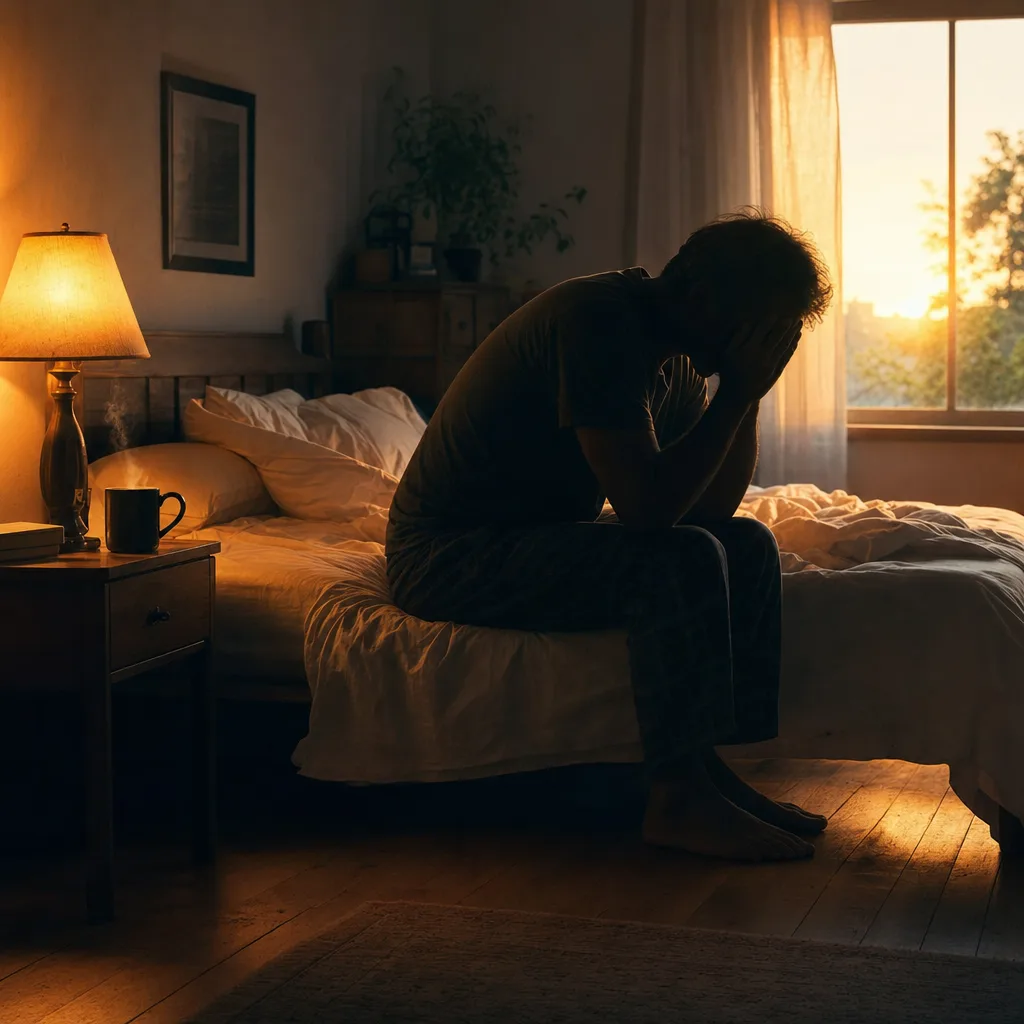
Sleeping for eight hours and still feeling tired does not point to one cause. Schedule, sleep continuity, stress, environment, medications, health conditions, snoring, and breathing changes may all be relevant. A phone recording can add one layer of nighttime context, not identify the answer.
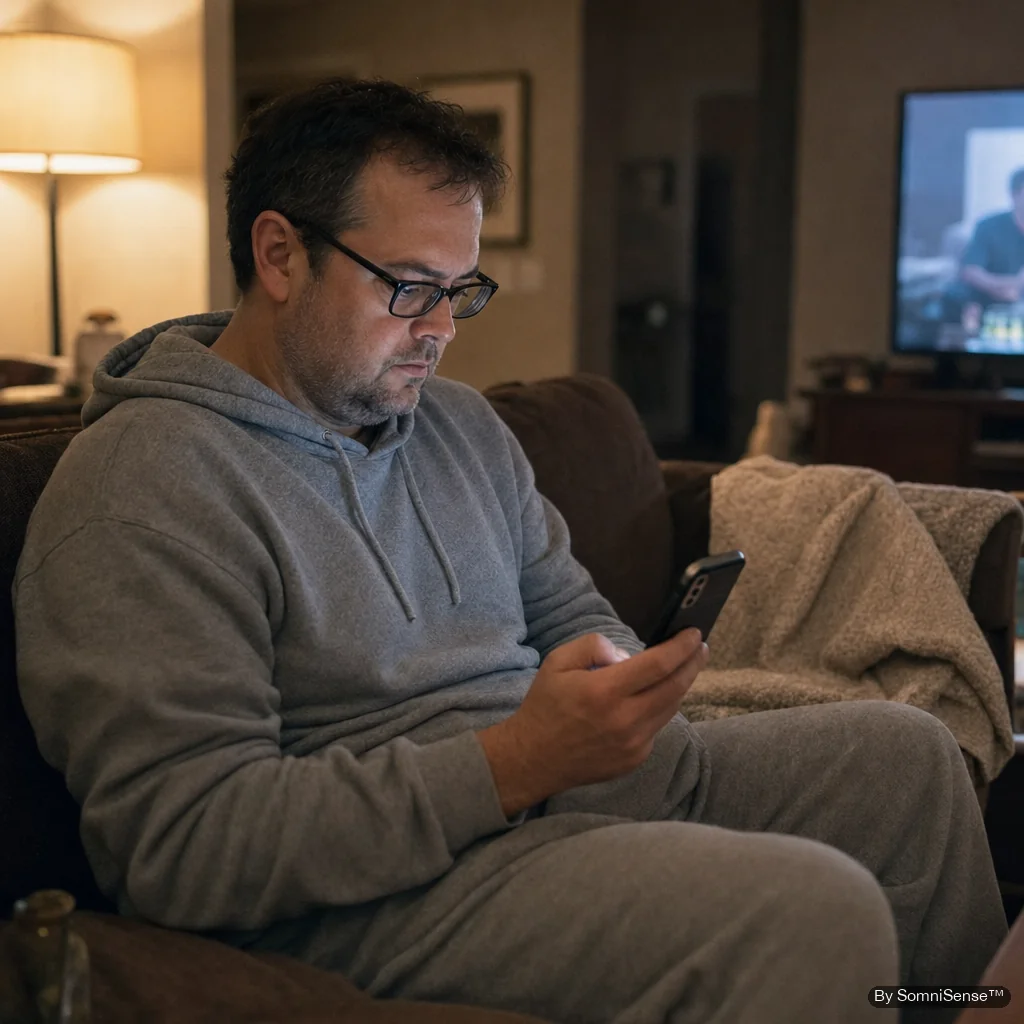
Start by separating duration from experience
“Eight hours” usually means the interval between going to bed and getting up. It does not automatically show how long you were asleep, how often you woke, how the room or schedule affected you, or whether snoring and candidate breathing regions were audible.
SomniSense focuses on the acoustic part of that picture. It does not measure every dimension of sleep quality.
Several different factors may deserve attention
- Schedule and continuity: irregular timing, awakenings, or too little actual sleep.
- Environment: noise, temperature, light, or a partner’s movement.
- Stress and mental load: feeling tired can persist even when time in bed looks adequate.
- Medications and health conditions: these require appropriate clinical consideration.
- Snoring or breathing observations: phone audio may add context, but it cannot establish that they caused the fatigue.
A simple first week
- Record a few ordinary nights without trying to fix everything at once.
- Each morning, note how refreshed you feel and anything obvious that changed.
- Review the whole-night timeline before focusing on one score.
- When audio is available, listen to a few representative moments rather than every event.
- If you later test one change, tag it and compare several tagged and untagged nights.
The goal of the free week is to begin a personal baseline and form better questions — not to diagnose yourself in seven days.
What SomniSense may help you notice
- When snoring or candidate breathing regions appeared during the night.
- Whether observations clustered in particular hours.
- What locally available audio sounded like around selected regions.
- How nights varied as your personal baseline grew.
- Whether a tagged group was associated with a different app reading, with sample sizes visible.
Those observations cannot establish that snoring or breathing caused your fatigue, prove that a change worked, or rule out other explanations.
When to look beyond the app
Consider professional guidance when fatigue persists, affects driving or daily function, comes with repeated gasping or partner-observed breathing pauses, or simply remains concerning to you. Bring your symptom notes and, if useful, a multi-night wellness summary. A normal-looking app report should not end that conversation.
Common questions
Can stress make me tired despite 8 hours of sleep?
Yes, stress can contribute, but it is only one of many possible factors. SomniSense cannot identify the cause of fatigue or rule medical conditions in or out.
Could it be a thyroid problem or another condition?
Persistent fatigue has many possible medical and non-medical causes. A clinician can decide which evaluation is appropriate; a BRI value cannot answer that question.
How many nights should I record?
One night is one observation. A week can begin to show normal night-to-night variation, and more comparable nights add context. No fixed number proves why you feel tired.
Should I change several habits at once?
If your goal is to learn from the comparison, keep it simple. First observe a few ordinary nights, then tag one clear change at a time. Any difference is an association, not proof of cause.
What if every app reading looks normal?
Normal-looking phone observations do not rule out sleep, medical, medication-related, mental-health, schedule, or environmental causes of fatigue. Persistent symptoms deserve appropriate professional evaluation.
Free keeps first-night evidence and a recent 7-day trend. Several nights add context; they do not identify the cause of fatigue.
Read next
Keep several nights of observations in one clear report.
Longer-period structured reports organize candidate acoustic events, trends, tags, sample coverage, method, and limits. Save one for your own review or share it as background for a conversation. PDF reports are currently available in English.