START WITH WHAT YOU NOTICED
You wake up foggy. A night record can add context—not a cause.
SomniSense can organize candidate nighttime breathing and snoring patterns by time, waveform, and available audio. It cannot determine why you feel unfocused the next day.
Brain fog is nonspecific. A phone-audio observation may add context, but it cannot measure sleep quality, oxygen, airflow, sleep stage, or the cause of a daytime symptom.
THE USEFUL QUESTION
Focus problems can occur with OSA, but they are not specific to it. Note the daytime experience, inspect what the phone captured overnight, and look for repetition across several nights.
Could it be one of the symptoms people discuss with OSA?
Possibly—but the symptom is not specific. The U.S. National Heart, Lung, and Blood Institute lists frequent loud snoring, breathing that starts and stops, gasping, daytime sleepiness or tiredness, problems with learning or focusing, and headache among possible sleep-apnea symptoms. The same page advises discussing symptoms with a healthcare provider because a sleep study may be needed for diagnosis.
Read the NHLBI sleep-apnea symptom list →
If difficulty concentrating persists, changes suddenly, affects safety, or comes with other concerning signs, seek appropriate professional guidance rather than waiting for an app pattern.
What SomniSense can add tomorrow morning
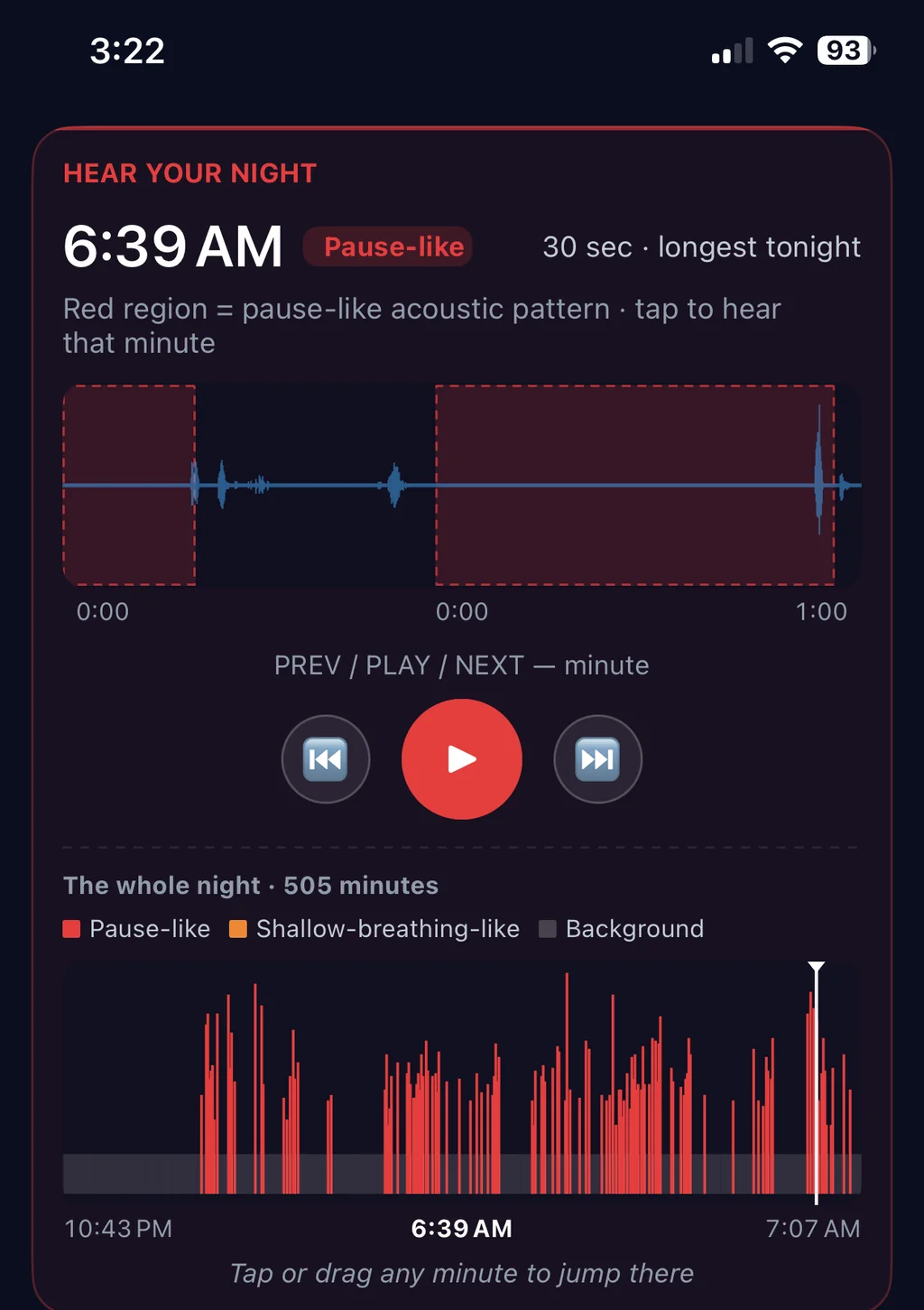
- Candidate pause-like or shallow-breathing-like acoustic labels
- Model-estimated time and duration
- A marked waveform and whole-night position
- Available local audio for selected events
- A recent multi-night view when you continue recording
These are phone-audio wellness observations. They do not establish airflow reduction, oxygen change, arousal, sleep stage, or a clinical event.
A practical, bounded record
- Write down the symptom in plain terms without interpreting it.
- Record with the phone in a consistent bedside position.
- Inspect candidate evidence rather than relying on one score.
- Repeat across nights before describing a pattern.
- Share only the context a qualified professional finds useful.
Continue with evidence, not a diagnosis
Common questions
Can poor sleep cause brain fog?
Sleep can be one of many contributors to concentration problems, but the symptom does not identify a cause. Stress, medications, mood, illness, schedule, and other factors may also matter.
Can SomniSense tell whether breathing caused my brain fog?
No. SomniSense can add a time-organized phone-audio record of candidate nighttime breathing and snoring patterns. It cannot connect that record to the cause of a daytime symptom.
What should I do if this keeps happening?
Persistent, worsening, or concerning cognitive symptoms deserve appropriate professional evaluation. Do not use a quiet SomniSense night to rule out a medical issue.
Keep several nights of observations in one clear report.
Longer-period structured reports organize candidate acoustic events, trends, tags, sample coverage, method, and limits. Save one for your own review or share it as background for a conversation. PDF reports are currently available in English.