Eight hours in bed and still tired? Duration is only one clue.
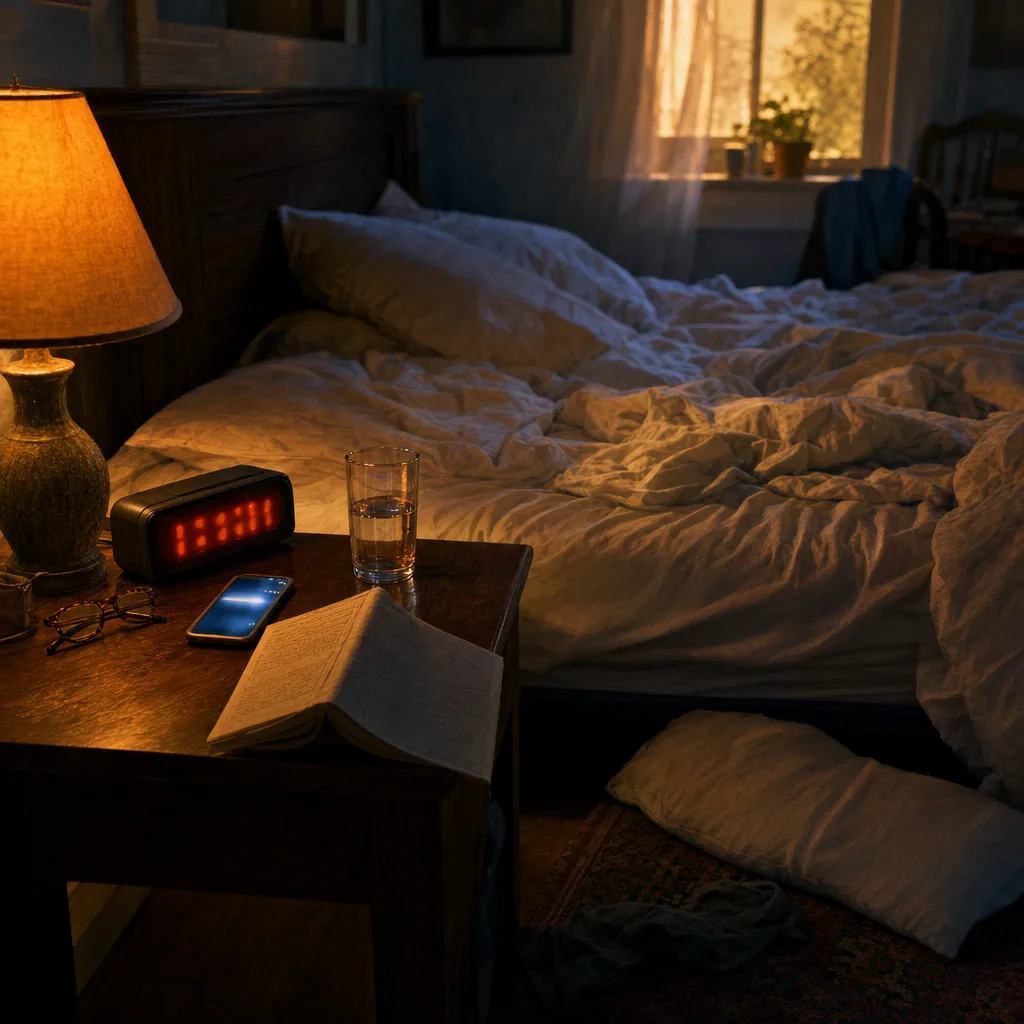
The interval between bedtime and getting up is not the same as a medical explanation for fatigue. Schedule, awakenings, environment, stress, medications, health conditions, and many other factors can overlap.
Phone audio adds only the acoustic part of that picture. It cannot measure sleep stages, arousals, oxygen, airflow, or the cause of how you feel in the morning.
What one SomniSense night can add
The morning view can organize snoring and candidate breathing-sound regions by time. You can return to a selected minute, inspect the marked waveform, and play locally available audio.
Those product estimates do not prove that an acoustic pattern fragmented sleep or caused fatigue. A quiet or low app result also cannot rule out a sleep or medical condition.
Why several nights are more useful than one
Repeated nights can show ordinary variation and build a personal baseline. If you tag a routine, the app can compare tagged and untagged observations once both groups have enough samples.
More nights improve context; they do not turn a consumer signal into a diagnosis or a causal test.
Read next
If you'd rather see your own night than read about someone else's —
It's free on both stores. Put the phone on the nightstand tonight; the report is there when you wake up.
Free basics stay available: core first-night candidate evidence, 5 audio plays per night, and a recent 7-day trend.